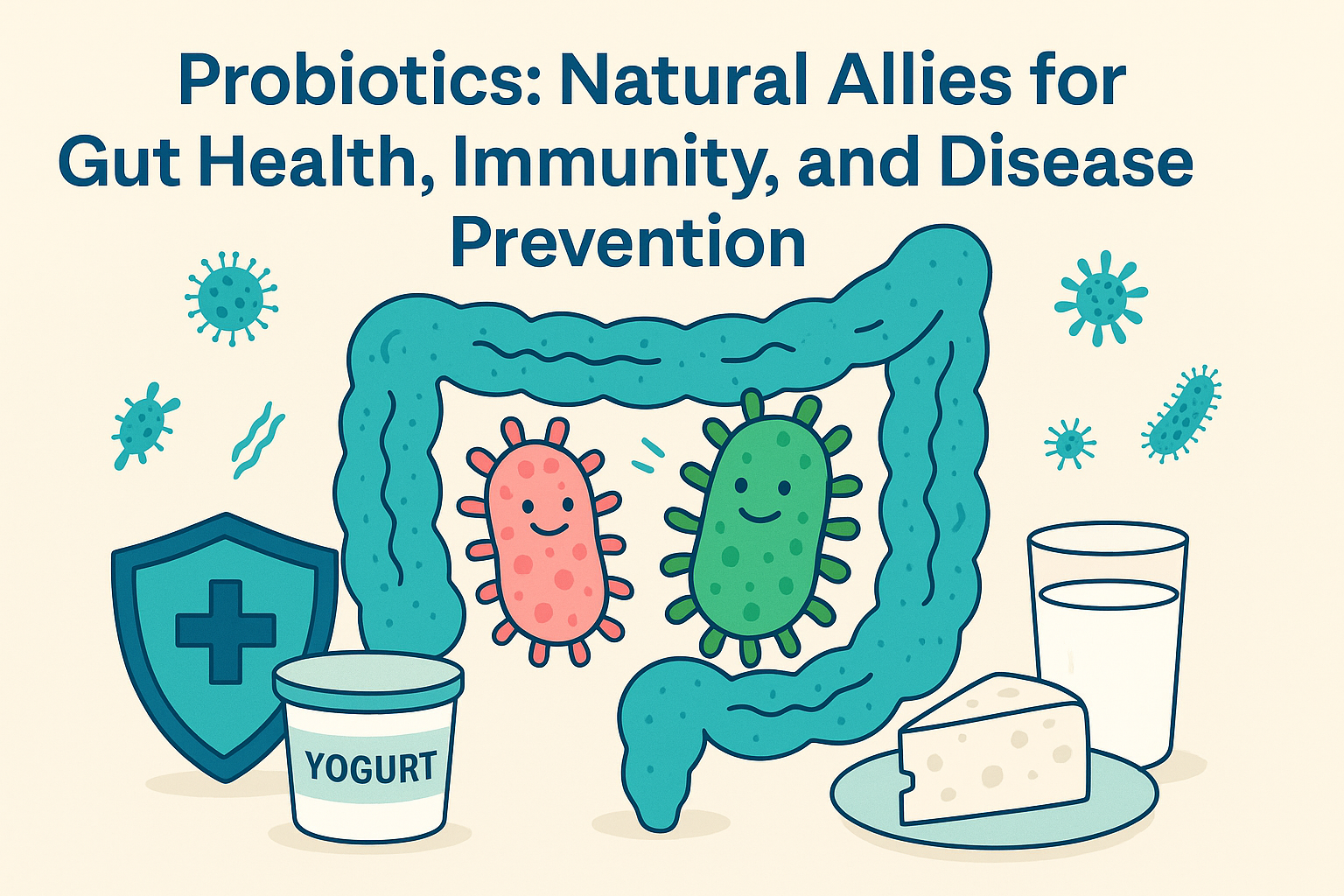
Probiotics: Natural Allies for Gut Health, Immunity, and Disease Prevention
- admin
- 7:59 pm
Introduction
Probiotics are live microorganisms, which, when administered in adequate amounts, confer a health benefit on the host (FAO/WHO, 2002). The concept of probiotics, meaning “for life,” was introduced in the early 20th century by Elie Metchnikoff. However, it gained momentum only recently with significant advances in the functional and health food market across the world.
The bacteria influence gut physiology and health by exerting numerous activities, including fermentation of dietary compounds, production of short-chain fatty acids, modulation of the immune system, transformation of bile acids, and providing a barrier against pathogenic bacteria. The idea of changing the diet to suppress harmful bacteria and stimulate beneficial bacteria may significantly improve human health, gut health, and immunity.
Gut Health and Immunity: The Role of Probiotics
The human body hosts approximately 10^4 bacteria, the majority residing in the gastrointestinal tract. These microflora play an essential role in health maintenance by modulating immune system activity, protecting against invading pathogenic bacteria, including E. coli, H. pylori, and other diarrhea-causing organisms.
The gastrointestinal tract is a complex ecosystem where Lactobacillus forms an important constituent. Studies conclude that humans host about 10–15 billion living bacteria, comprising approximately 400 species. Naturally occurring probiotics include:
Lactobacillus acidophilus
Lactobacillus rhamnosus
Lactobacillus bulgaricus
Lactobacillus casei
Lactobacillus arabinose
Lactobacillus plantarum
Key Health Benefits of Lactobacilli Probiotics
Lactobacilli species and strains exhibit several beneficial effects contributing to gut health, immunity, and overall well-being:
Production of antibiotic-like substances (Bacteriocin)
Synthesis of vitamin B-complexes
Deconjugation of bile salts, lowering cholesterol absorption
Degradation of N-nitrosamines, reducing colon cancer risk
Improved digestion of lactose in lactase-deficient individuals
A slight reduction in body weight can lower blood pressure and reduce diabetes risk, achievable through dietary habits, physical activity, and probiotic consumption.
Probiotics and Weight Management for Gut Health
Two essential strategies can help control weight with probiotics:
Reducing glucose absorption from the intestine
Increasing metabolic use of glucose
Lactobacilli ferment foods, neutralizing phytate and phenolic compounds present in cereals, which inhibit mineral absorption. A human study demonstrated that calcium significantly augmented weight and fat loss from the trunk region. Dairy products exert a substantially greater effect due to calcium presence, highlighting the importance of dairy products in obesity treatment. However, further research is needed to confirm if dairy calcium reduces fat consistently.
Conjugated Linoleic Acid (CLA) and Weight Loss
When CLA was fed to growing mice, body fat was severely reduced. Triglyceride accumulation is suppressed by CLA, described as the main reason for weight loss. This anti-obesity activity is linked to the probiotic Lactobacillus rhamnosus.
Probiotic-based food products like yogurt and curd have nutritional, immunological, and health benefits, especially for weight reduction in overweight or obese individuals. Specific bacterial strains, including Lactobacillus bulgaricus and Streptococcus thermophilus, can be used in new food product development as dietary supplements for human health improvement.
Disease Prevention Through Probiotics
Probiotics contribute significantly to preventing various diseases while supporting gut health and immunity.
Colon Cancer Prevention
Certain probiotics, such as Lactobacillus bulgaricus, may help prevent colon cancer by inhibiting the breakdown of enzymes (β-glucuronidase) that contribute to cancer-causing agents’ growth.
Lowering Cholesterol Naturally
Various lactic acid bacteria (LAB) can break down bile in the gut, preventing its reabsorption, which subsequently reduces cholesterol levels in the blood.
Blood Pressure Reduction with Probiotics
Consumption of milk fermented with different LAB strains may result in modest blood pressure reductions due to ACE inhibition-like peptides produced during fermentation.
Managing Antibiotic-Associated Diarrhea (AAD)
An imbalance in colonic microbiota can lead to AAD. Probiotic treatment reduces the incidence and severity of AAD. However, the effectiveness depends on the probiotic strain and dosage used.
Allergy Management and Gut Immunity Enhancement
Probiotics assist in
Degradation and structural modification of enteral antigens
Normalization of gut barrier functions
Regulation of inflammatory mediators
Promoting immune system development
Preventing food allergies by enhancing barrier mechanisms
Alleviating intestinal inflammation
Stimulating immune responses and reducing serum IgE levels
Reducing Th2 cytokine responses
Thus, probiotics play a critical role in supporting gut health and immunity, benefiting individuals with allergies or inflammatory gut conditions.
Characteristics of Effective Probiotics for Gut Health
For probiotics to provide health benefits, they must
Survive passage through the digestive system
Attach to intestinal epithelia and colonize
Maintain good viability
Utilize nutrients and substrates from a normal diet
Be non-pathogenic and non-toxic
Exert a beneficial effect on the host
Exhibit stability during processing, storage, and transportation
Possess anti-inflammatory, anti-mutagenic, and immunostimulatory properties
Advantages of Probiotics for Immunity and Health
Probiotics enhance gut health and immunity through several mechanisms
Key Probiotic Benefits for Gut Health
Produce lactic acid, lowering intestinal pH and inhibiting harmful bacteria like Clostridium, Salmonella, Shigella, and E. coli
Decrease toxic or carcinogenic metabolites
Aid mineral absorption, especially calcium
Produce β-D-galactosidase enzymes to break down lactose
Generate antimicrobial substances like acidophilin and bacteriocin to control pathogens
Produce essential vitamins, especially B-complex and vitamin K
Act as barriers preventing harmful bacteria from colonizing intestines
Probiotics and Disease Defense
Potential anti-carcinogenic effects through fermentation byproducts
Antidiarrheal effects via crowding out pathogens
Strengthening of the intestinal wall
Potential antiallergenic benefits reinforcing the intestinal barrier
Probiotics for Infection Prevention and Immunity Boosting
Probiotics may help prevent HIV and sexually transmitted infections (STIs) in women. They work indirectly by treating recurrent bacterial vaginosis or directly by secreting endogenous substances like hydrogen peroxide or exogenous compounds that block HIV and STI transmission.
Innovative Research: Modified Yogurt Bacteria
Yogurt-based bacteria have been genetically modified to deliver cytovirin, a drug that blocks HIV infection.
Probiotics and Kidney Stone Prevention
Evidence suggests oxalate-degrading bacteria, Oxalobacter formigenes, living symbiotically in the human intestine, express enzymes like formyl-Co-transferase and oxalyl-CoA-decarboxylase to degrade oxalate, reducing kidney stone formation risk.
Frequent antibiotic intake may eliminate this beneficial probiotic, increasing the likelihood of kidney stones.
Supporting Immune Function After Exercise with Probiotics
Following heavy endurance exercise, the immune system is suppressed for up to 12 hours, termed the “open window,” when upper respiratory tract infection risk increases.
Probiotics for Athletes and Marathon Runners
Ongoing research explores the value of probiotics in supporting immunity and gut health during these vulnerable periods, especially for endurance athletes like marathon runners.
Conclusion
Probiotics play a critical role in promoting gut health, boosting immunity, and preventing diseases. Naturally occurring probiotic strains like Lactobacillus species improve digestion, regulate cholesterol, assist in weight management, enhance nutrient absorption, and provide defense against harmful bacteria.
Integrating probiotic-rich foods like yogurt and curd or specific probiotic dietary supplements into daily routines offers remarkable health benefits. Probiotics contribute significantly to reducing allergy symptoms, managing gut health, preventing colon cancer, lowering blood pressure, supporting immunity post-exercise, and potentially preventing infections.
Probiotics are essential, natural allies for gut health, immunity enhancement, and disease prevention.
Latest Post
Share it :
Facebook
Twitter
LinkedIn
Email

admin